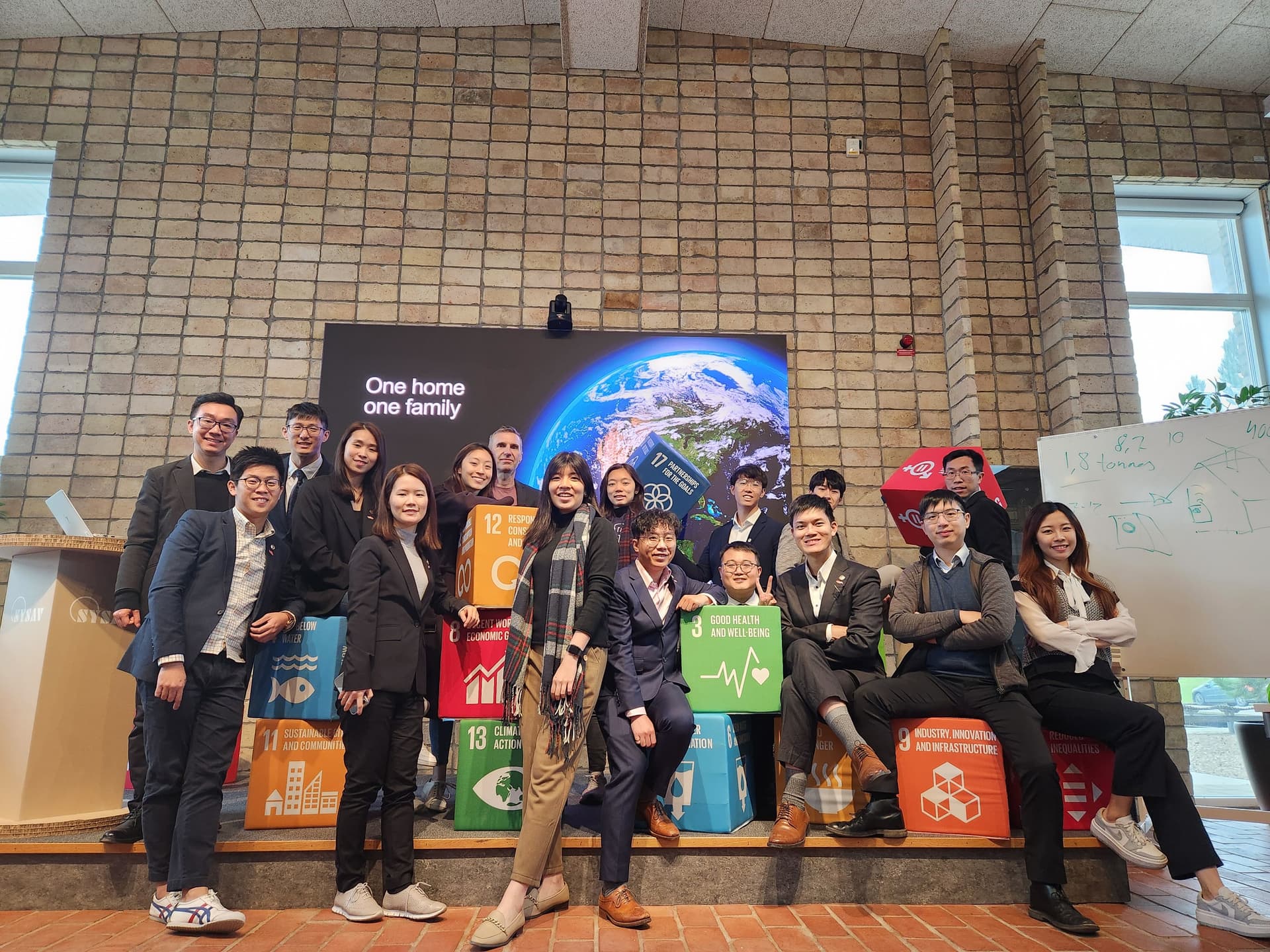
Imagine a world where sustainability meets innovation, where engineering paves the way for a greener future. The Hong Kong Institution of Engineers Young Members Committee (HKIE YMC) Overseas Delegation 2024 ventured into the heart of Sweden on a mission centred around “Mind-mapping Sustainable City”.
Sweden, a global leader in sustainable development and the formulation of environmental policies since the Stockholm Declaration in 1972, set out a perfect backdrop for this exploration.
The trip provided a remarkable opportunity for the delegation of 16 young engineers to explore the intersection of engineering and the United Nations Sustainable Development Goals (UNSDGs). Sweden’s commitment to sustainability and innovative engineering practices served as a powerful inspiration for the delegation under the three study focuses.
The Intersection of Health, Mobility, and Recreation
In view of challenges arising due to the ageing population, both Sweden and Hong Kong are redefining elderly healthcare. Hong Kong’s strategy emphasises the provision of elderly-friendly infrastructure, while that of Sweden’s focuses on synergising the healthcare industry.
In the realm of safe mobility, both Hong Kong and Sweden recognise the importance of ensuring road safety. Hong Kong prioritises the safety design of road infrastructure in the pursuit of “Zero Accidents on the Road,” while Sweden delves into innovative solutions involving the implementation of autonomous embedded safety systems within vehicles, all guided by the overarching vision of “Vision Zero”.
For the advancement of recreation and sports development, Kai Tak Sports Park stands out as a prominent Mega Project in Hong Kong, contrasting with Sweden’s Sege Park reimagined as a blueprint for sustainable living and community engagement.
Affordable and Clean Energy
When it comes to energy, the integration of advanced waste-to-energy technologies, strategic use of automation in manufacturing, and proactive government policies collectively drive the evolution of sustainable and efficient energy systems. These initiatives not only tackle present energy and environmental challenges but also pave the way for a more sustainable and energy-efficient future. Through this comparative examination of practices in Hong Kong and Sweden, invaluable insights emerge to shape global strategies in sustainable energy practices.
During the delegation’s exploration at O·PARK1 and SYSAV, the implementation of advanced technologies in waste-to-energy processes was vividly showcased. O·PARK1 employs anaerobic digestion to convert food waste into biogas, transforming organic waste into a valuable energy resource. Likewise, SYSAV utilises advanced steam boilers that combine waste management with energy production, enhancing overall efficiency. The visit to ABB Electrification in Sweden underscored how automation enhances industrial productivity and sustainability through the development of robotic arms and optimised manufacturing processes.
Unveiling Sustainable Urban Marvels
Transport infrastructure planning emerges as a pivotal factor in promoting green modes of travel. New Slussen, Sweden’s second largest public transport hub after Stockholm Central Station, exemplifies as commitment to sustainable mobility amidst urban growth. The traffic solution was designed to accommodate the escalating number of public transport users, pedestrians and cyclists in sync with Stockholm’s expanding urban landscape. The meticulous infrastructure planning not only streamlined access to green transport options but also optimised travel times.
Waste management practices in Sweden also showcase a model for global emulation. The country boasts extensive waste management infrastructure, featuring comprehensive sorted waste collection systems and recycling facilities, a fact underscored not only at our visit to Western Harbour but across the nation.
Exploring the accessibility of public and green spaces was another key focus of the delegation. The concept of mixed-use development within communities prioritises seamless access to public transportation, employment opportunities, healthcare services, and essential amenities, fostering a harmonious blend of urban living and environmental consciousness.
Championing Sustainable Engineering
The delegation witnessed groundbreaking solutions aligned with the UNSDGs. From energy systems and urban planning to cutting-edge transportation infrastructure and circular economy models, Sweden’s engineering feats offered a blueprint for a more sustainable world made possible by technological means.
Engaging discussions with Swedish experts ignited a spark of inspiration, urging the delegation, fellow engineers and global citizens to carry forth these transformative ideas. Engineers shall pledge to uphold sustainable engineering practices and strive towards realising UNSDGs. Together, let’s engineer a better future for our shared home, Earth.