The landscape of global business is undergoing an unprecedented transformation, primarily driven by the pervasive advancements in Artificial Intelligence. For C-level executives navigating the period from 2025 to 2035, traditional leadership paradigms are no longer sufficient. Success in this AI-driven era will hinge on a dynamic blend of human-centric strengths, profound AI literacy, and a strategic mindset capable of orchestrating pervasive technological and cultural change.
This Deep Research report outlines the essential skills that will define tomorrow’s successful C-suite.
1. AI Literacy and Data Acumen: The New Foundational Competency
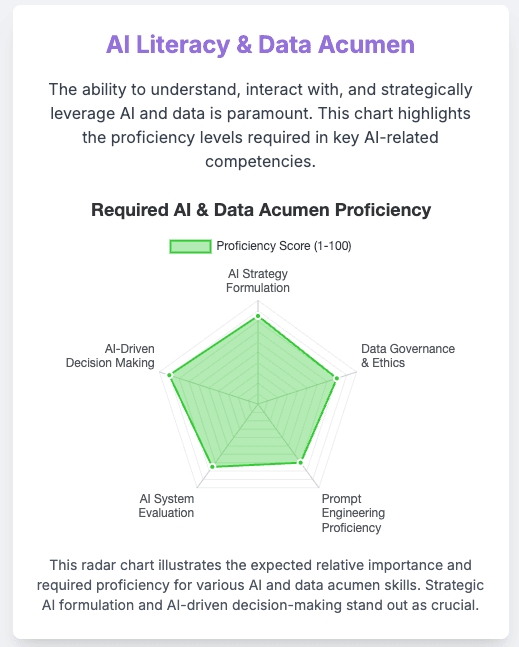
While not expected to be expert coders, C-level executives must possess a deep understanding of AI’s capabilities, limitations, and ethical implications. This “AI literacy” is foundational to strategic decision-making.
• Understanding AI’s Potential: Leaders need to grasp how AI, including generative AI and machine learning, can fundamentally reshape their industry, create new value propositions, and optimize existing operations. This includes recognizing AI’s ability to analyze vast data sets and identify patterns far beyond human capacity.
• Data Governance and Ethics: As AI relies heavily on data, executives must champion robust data governance frameworks. This involves ensuring data quality, privacy, security, and establishing clear ethical guidelines for AI development and deployment to mitigate risks like bias and ensure transparency.
• AI-Driven Decision Making: The shift moves from purely intuitive decision-making to one augmented by AI insights. C-suite leaders must be able to interpret AI-generated analyses, ask the right questions of AI models, and integrate these insights with their strategic judgment.
• Prompt Engineering Proficiency: A practical understanding of how to effectively interact with AI tools, particularly generative AI, through skilled prompt engineering, will be crucial for extracting maximum value from these technologies.
2. Strategic & Transformational Leadership: Guiding the Evolution
The AI era demands leaders who can not only set a compelling vision but also actively manage the complex organizational and cultural transformation required to achieve it.
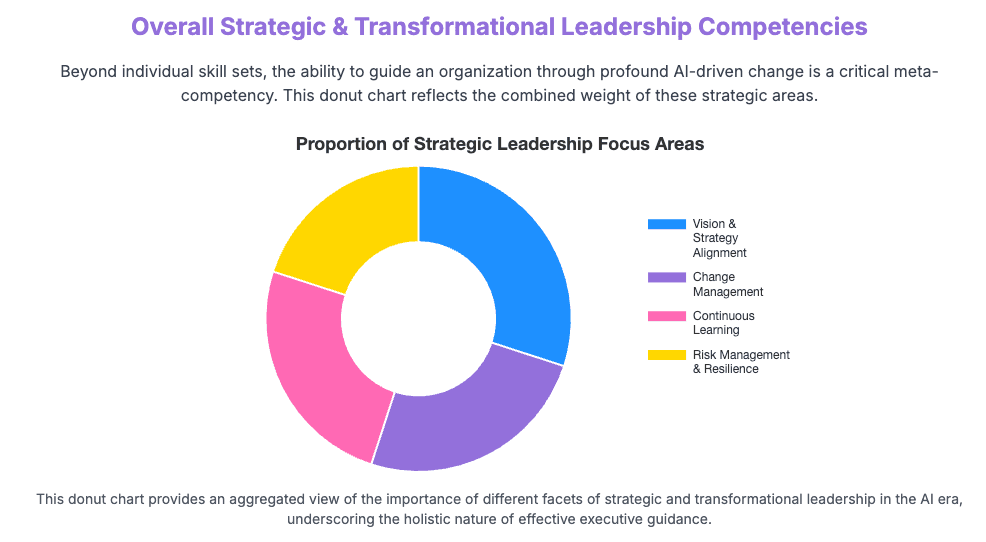
• Vision and Strategy Alignment: Crafting a clear, long-term vision that integrates AI as a core strategic pillar is paramount. This involves anticipating market disruptions, identifying new growth opportunities, and aligning AI initiatives with overarching business objectives.
• Change Management: Leaders must be adept at guiding their organizations through continuous change. This includes communicating the benefits of AI, addressing employee concerns, and fostering a culture that embraces experimentation and adaptability.
• Continuous Learning: The rapid pace of AI innovation necessitates a “perpetual learning” mindset. Executives must commit to ongoing education, staying informed about the latest AI advancements, and modeling this curiosity for their teams.
• Risk Management and Resilience: AI introduces new forms of risk, from algorithmic bias to cybersecurity vulnerabilities. Leaders must develop robust strategies to identify, assess, and mitigate these risks, ensuring organizational resilience in the face of AI-driven disruptions.
3. Human-Centric Skills: The Enduring Competitive Edge
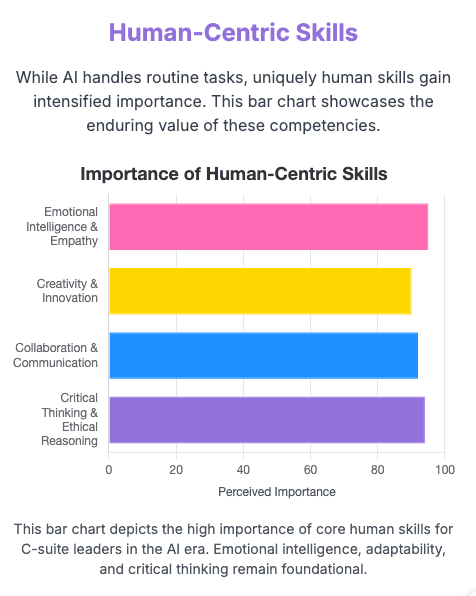
Paradoxically, as AI’s technical capabilities grow, the demand for uniquely human skills intensifies. These competencies enable leaders to foster collaboration, inspire teams, and maintain ethical oversight.
• Emotional Intelligence & Empathy: Critical for building trust, managing team dynamics, and understanding stakeholders’ needs. Leaders with high EQ can navigate the anxieties associated with AI adoption and foster inclusive environments where humans and AI can thrive together.
• Creativity and Innovation: While AI can generate content, true innovation and “out-of-the-box” thinking remain human domains. C-suite leaders must cultivate a culture that encourages creative problem-solving and leverages AI to accelerate ideation and experimentation.
• Collaboration and Communication: The future workplace will be a blend of human and AI capabilities. Leaders must facilitate seamless human-AI collaboration, articulating clear roles, and communicating effectively across diverse teams, including technical AI specialists and business units.
• Critical Thinking and Ethical Reasoning: As AI provides insights and recommendations, human judgment is vital for evaluating their credibility, identifying limitations, and ensuring ethical outcomes. This skill is crucial for responsible AI deployment and maintaining stakeholder trust.
Conclusion
The next decade will see AI deeply embedded in every facet of business. For C-level executives, success will be defined not by technical prowess in AI development, but by their ability to strategically integrate AI, champion talent transformation, and foster a symbiotic human-AI collaboration. The leaders who prioritize continuous learning, embrace ethical AI governance, and augment human potential with intelligent automation will be the ones who truly drive their organizations into a prosperous and innovative future.