For the past two decades, Hong Kong has lagged behind several Asian cities when it comes to innovation and technology. Cities like Singapore, Shenzhen, and Beijing have become centres of technology and innovation while Hong Kong has stayed aloof.
In the past few years though, this has started changing rapidly. In fact, the government has set aside HK$50 billion for technology and innovation in its latest budget. Plus, Hong Kong is now a part of the “Greater Bay Area” project which wants to turn Hong Kong and 10 neighbouring regions into the Silicon Valley of Asia. Given all these initiatives, it’s no surprise that the number of tech startups in Hong Kong grew by 34% between 2019 to 2023.
With the optimistic technology scene in Hong Kong, the number of startup and tech-related jobs is on the rise. One of the most sought-after people in the tech industry is UI/UX designers.
What is an UX designer?
UX design is becoming an increasingly desirable profession among young people not just in Hong Kong but across the world. According to the US Bureau of Labour Statistics, it ranks in the top 5.
According to Laura Klein, author of ‘UX for Lean Startups’,
“If UX [user experience] is the experience that a user has while interacting with your product, then UX Design is, by definition, the process by which we determine what that experience will be.UX Design always happens. Whether it’s intentional or not, somebody makes the decisions about how the human and the product will interact. Good UX Design happens when we make these decisions in a way that understands and fulfils the needs of both our users and our business.”
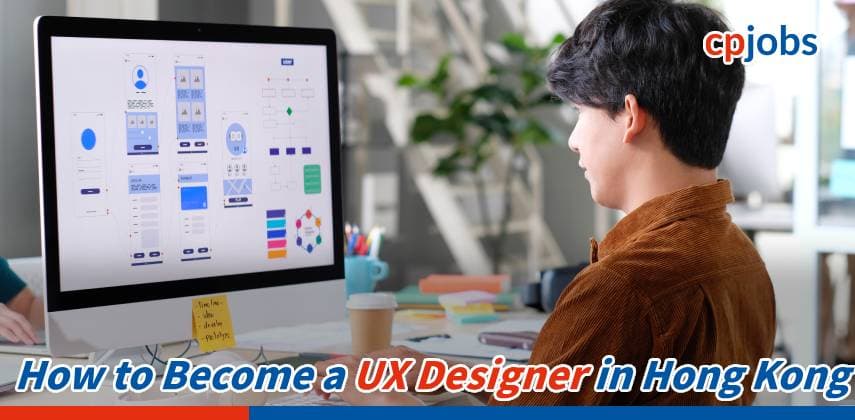
Simply put, UX design is the art and science of designing the way a user experiences a product. UX designers start by imagining the user experience. They then use different tools like Figma, Photoshop, Sketch, and Illustrator to create wireframes, storyboards, mockups, and sitemaps for the product. They also test the product flow with a few users and modify the design based on customer feedback.
What is the difference between a UI and a UX designer?
UI (User Interface) and UX(User Experience) design are often combined into the same role in many organisations, although there is a slight difference between the two. UX designers focus on the journey and experience of the user. UI designers, on the other hand, work on how users interact with the product at the level of sight and touch. Many experts believe that UI design is a subset of UX design and most job roles come with the title ‘UI/UX designer’.
Imagine a house. The electrical system, plumbing, HVAC are the UX of the house; they define the experience of the homeowner. The windows, doorknobs, paint, and so on are the UI; the elements the homeowner interacts with and enjoys.
As Helga Moreno succinctly puts it, “Something that looks great but is difficult to use is exemplary of great UI and poor UX. While Something very usable that looks terrible is exemplary of great UX and poor UI.”
Why become an UX designer?
You’re probably going through this article because you’re wondering “Is UI/UX design a good career?” or “Should I do UX design in Hong Kong?” or even “Is UI/UX design the best tech career for a designer?”. Here are some compelling reasons why becoming a UX designer is a great career choice.
Career Satisfaction
UX design is known for being one of the most satisfying career options with a very healthy work-life balance. It ranked 2nd in the Glassdoor list of top 25 jobs for work-life balance, with a rating of 4.1 over 5. By the end of 2019, Nielsen Norman Group conducted a study with UX designers rating their career satisfaction of 5.4 on a scale of 1-7.
Cutting-edge Technology Projects
While working with UX design in Hong Kong, you will be able to touch on cutting-edge tech projects that could transform the lives of millions of people. Most transformational work is happening in the tech industry today and UX design gives you a chance to be a part of that.
Great Remuneration and Growth Opportunities
UI/UX designer salaries in Hong Kong are among the most remunerative. Plus, there is a huge demand-supply gap when it comes to skilled UX designers. So if you have the skills, the opportunities are limitless.
The skill set required to become a UX designer
There are certain personality traits and soft skills that can help you be successful as a UI/UX designer. If you already have some of these skills, it’s a good sign that you’re suited for a career in UX design.
Empathy
There’s no way you can design the right user experience if you don’t understand your user inside out. Having a strong empathy towards the users is the only way to understand their needs, challenges and desires. Only then can you design an UX that works for them.
Collaboration and Humility
A UI/UX designer has to collaborate with developers, customers, C-level executives and other stakeholders. The best UX design can only come if the designer has the humility to accept feedback and work with different sets of people to get the best results.
Initiative
Since UX design is a field that’s constantly evolving, you need to be a self-starter. You can become a successful UX designer only if you’re willing to go the extra mile and keep learning on the job.
At the same time, you also need to have certain technical skills that are critical in this job. Here are some of the most critical ones.
UX Research
As a UX designer, you will need to make design choices at every juncture. These choices need to be carefully researched and meticulously planned. Researching different areas from cognitive psychology to computer science are par for the course.
Wireframing and Prototyping
As a UX designer wireframing and prototyping tools are the easiest way to showcase your design. You will need to get extremely comfortable with these tools.
Visual Communication
You will end up having to create dozens of icons, assets, presentations, mockups, and interactive prototypes. You will need to cultivate good UI design skills to become a holistic UX/UX designer.
UX Writing
Well-crafted words are often critical to seamless user experience. While you may have copywriters on your team, it’s always good to have first-hand knowledge of what makes for good UX writing.
Analytics
Analytics is key to being an effective UX designer. Creating great UX design means you have to constantly listen to your customers and be willing to incorporate their feedback. You won’t be able to do this unless you have a good grasp on analytics tools which use numbers to show you how users are responding to the product.
Taken together, these skills are what makes a good UX designer. Don’t worry if you don’t have all of these skills in the beginning. Doing a good course like Xccelerate’s UX Design course will help you build the skill set required to become a UX designer.
UX Design Courses in Hong Kong
Luckily, you don’t need to have a degree in design or a background in computer programming to become a UX designer. All you need to have is a flair for design thinking and a willingness to learn. UX designers come from all fields- psychology and fine arts to computers and hospitality.
The best way to become a UX designer in Hong Kong is by taking a course that focuses specifically on UI/UX design. From learning about what UX design is all about to picking up techniques to use different UX design tools like Figma or Sketch.
While picking a course you need to make sure it matches certain quality criteria. You need to ensure the faculty is experienced and the course curriculum is up to date. Of course, you also need to figure out the course duration and timing that will suit you.
Common FAQs about UX design career opportunities in Hong Kong
- What are the UI/UX designer salaries in Hong Kong?
If you want to become a UX designer in Hong Kong, remuneration is very competitive. The average annual salary for an UX designer can reach HKD$360K. This will depend to a large extent on the skills you already possess. If you have a year or so of experience or have done a high-quality UX design course in Hong Kong, the salary will be higher. A mid-career UX designer with the right skill set can earn up to HK$500K. - Which industries in Hong Kong are hiring UX designers?
Given the fact that there is a huge demand-supply gap and companies often have to hire UX designers from abroad, there is a huge demand for UX designers in Hong Kong. These are the areas which are hiring UX designers.
Startups
Of course, startups are where exciting UX jobs are. Although they may not always be the highest paid UX designer jobs, they come with a very sharp learning curve. Of course, some established startups like BitMEX, GoGoVan, and Klook also pay very well.
Finance
The banking and finance industry which has traditionally had a stronghold over Hong Kong is also moving to a digital paradigm. They are now focussing on creating user-friendly digital products which result in high demand for UX designers.
- Can a graphic designer become a UX designer?
A graphic designer already has a design thinking ability and an inherent sense of aesthetics. In fact, many graphic designers at different stages in their career have moved to UX design for better growth opportunities. Of course, you will need to upgrade your skill set and get a holistic understanding of what UX design is all about. But you don’t need to quit your job to make this happen. You simply learn about UX design by doing Xccelerate’s UX design course even while you’re working as a graphic designer.
Summing Up
UX design is definitely an upcoming career that will grow with the tech industry in Hong Kong. If you have a knack for design thinking and the ability to empathise with users, you should definitely consider becoming a UX designer in Hong Kong. Click to know more on the Fundamentals pf UX/UI Design.